

Can a nation truly win a war when its military intelligence is fundamentally broken? History provides a haunting, bloody answer. In Iraq, a 100% failure rate on WMD intelligence cost a generation its future. Today, we are witnessing a repeat of this same hubris.
For years, the so-called “experts” in Washington and London told us Iran’s reach was capped at 2,000 kilometers. That was the magic number that allowed bases like Diego Garcia to sleep soundly, believing they were untouchable fortresses.
But on March 21st, that yardstick was snapped in half. Two Iranian missiles streaked 4,000 kilometers across the Indian Ocean toward Diego Garcia. While the Pentagon praised the USS Joseph for a lucky interception, the world, and particularly the people of Bahrin, saw it differently. To them, if a base thousands of miles away is now a target, then the 5th Fleet in Bahrain, sitting
only 200 kilometers from the Iranian shore, is no longer a deterrent. It is a liability.
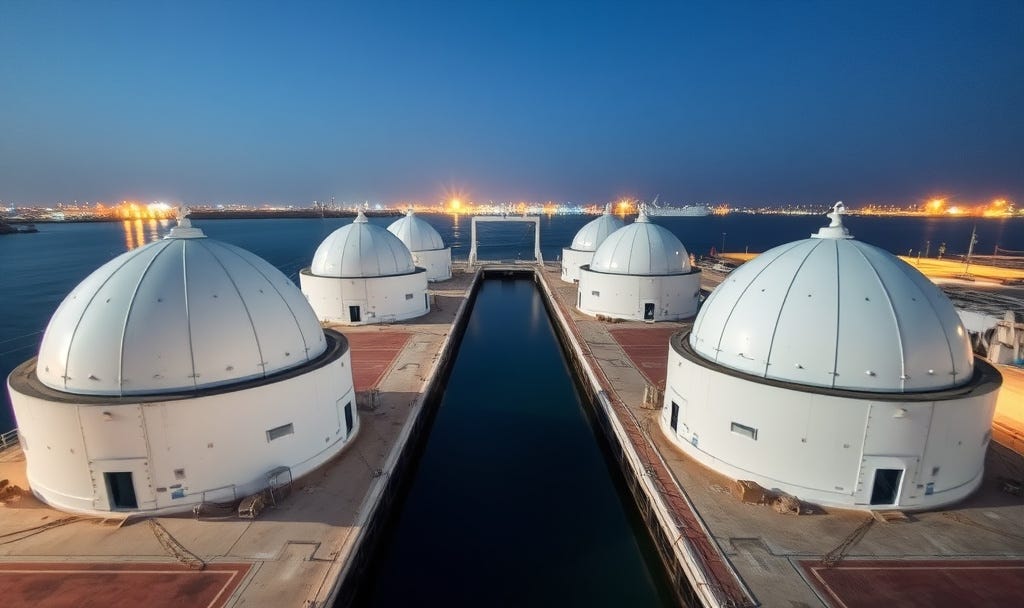
For the United States, this realization has created a political headache, nourished by a military disaster. Precision strikes by Iran have “sniped” the 5th Fleet’s infrastructure, destroying the two major SATCOM radomes at Juffair. These were the eyes of America’s Navy. With these radomes gone, the U.S. has lost more than 50% of its regional communication capabilities and, more importantly, the trust of the Bahraini government and people.
The result is visible for anyone standing in the harbor. For the first time in decades, the U.S. Navy has withdrawn nearly all of its combat vessels from the Bahrain base. The grey halls that once signaled American dominance have slipped away to the open sea, leaving the docks echoing and empty.
This retreat was followed by the ordered departure of all non-emergency personnel and military families from Bahrain. The 8,000 troops that were left behind are no longer seen in the cafes of Manama or the shops of Adliya. They are bunkered into safe houses, hotels, and deep bunkers, living like hostages to a conflict that moved faster than their government could track.
Internally, the military retreat and the attacks on the bases have triggered a systematic collapse of the Bahraini political order. The 70% Shiite majority, already fed up with the status quo, is watching the impenetrable 5th Fleet hide behind concrete barriers while their own neighborhoods become “missile sponges.” To the families in Sitra and Sanabis, they are being asked to die for a government that cannot even protect or secure its own borders.
The anger has boiled over into daily protests by tens of thousands who are not just fed up with the American presence but also mourning the death of Ayatollah Khamenei at the hands of both Israel and the U.S. Confronted by an angry majority that the local police could no longer contain, the monarchy was forced to call for outside help.
Led by the Saudi-led Peninsula Shield Force, the streets of Bahrain are now patrolled with an iron fist. Saudi tanks rattle through the neighborhoods, and soldiers arrest anyone who dares to challenge the government or document the military disaster engulfing the American naval base and their soldiers. Their main aim, however, is not to fight Iran. Rather, it is to prevent the palace from falling into the hands of its own citizens.
Despite the brutal crackdown, however, the Bahraini government still faces a massive internal and external problem. For the Bahraini monarchy, despite its internal power, a Saudi tank cannot fix a broken radar or a 4,000km missile range. The Crown Prince may hold the title, but he presides over a “Hollow Crown.” He has the palaces, but he has lost the asphalt, the radar, and the hearts of his people, who realize their “protector” is currently weak and bunkered.
The failure to see the 4,000-kilometer threat has left the 5th Fleet as a blind giant in a very small room. When the next strike comes, it won’t be a missile that ends this order; it will be the final, silent withdrawal of the tribal swords that were once the monarchy’s only true defense.
For the U.S., it means it has already lost Bahrain, not just on the map but also on the street.
In my opinion, by the time this if finished, the American fleet will not be wanted near any port in the middle east - a big FUCK YOU to Trump - and America’s OPEC deal
Did I see Fox News calling for elections in Bahrain.