

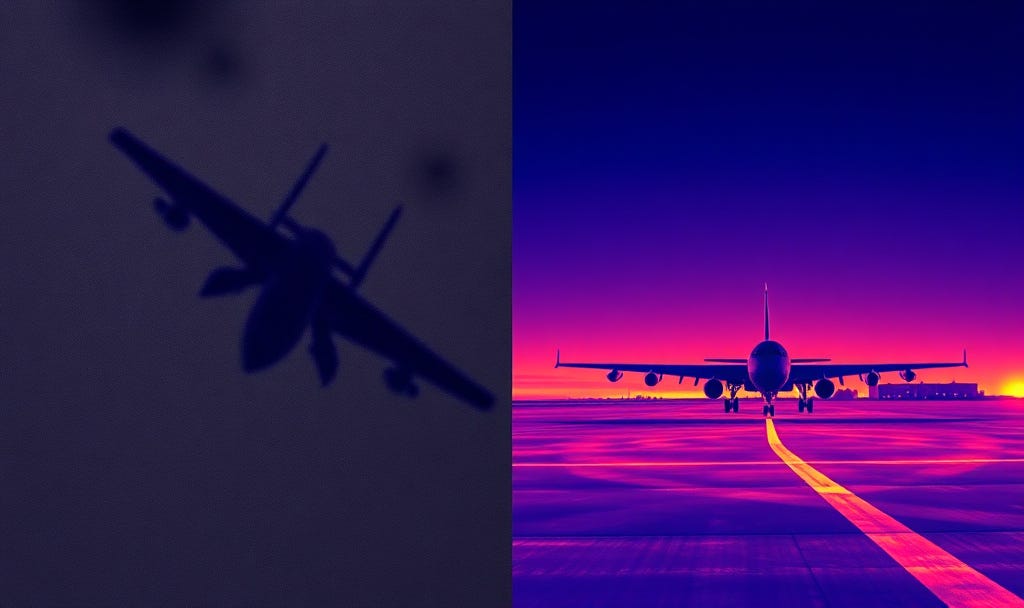
The initial firestorms of Operation Epic Fury have given way to a much colder, more calculated reality. On this eleventh day of conflict, the strategic map of the Middle East is being redrawn, not by territory gained, but by the staggering cost of every inch held. While the Pentagon maintains a posture of “decisive action,” internal records tell a story of a superpower and its closest ally being methodically broken by an economic and psychological siege. The “Eagle” is struggling to maintain its reach, leaving Israel in an isolated siege as the war shifts from rapid airstrikes into a systematic war of attrition.
This collapse begins with the most humiliating development of this war thus far: the “Decoy Gap.” Over the last 11 days, intelligence reports have confirmed that Iran is using high-fidelity deception to turn Western technological superiority against itself. Intelligence estimates now suggest that up to 25% of the precision munitions dropped in the first week hit fakes.
In this brutal arithmetic war, trading a $2 million Tomahawk, or a $150,000 Hellfire for a $200 bucket of paint or a $1,500 inflatable is a mathematical death sentence. With over 3,000 smart bombs already expended, the U.S. has effectively incinerated nearly $1 billion in capital on “nothing.”
The disaster, however, isn’t just about money; it’s about the crisis of depletion. The U.S. and Israel are running out of “smart” assets faster than their adversary can produce “dumb” paint. The exhaustion is so severe that it has forced a desperate “Pacific Pivot.” On March 10, 2026, reports confirmed the U.S. began stripping Patriot and THAAD missile systems from South Korea to fill the gap, literally cannibalizing the defense of Asia to keep the Middle East strategy from collapsing.
This degradation, however, is not limited to stockpiles; it has literally hollowed out the entire region’s military infrastructure. Bases like Muwaffaq Salti in Jordan and Al-Udeid in Qatar, and the vital installations in Bahrain and Kuwait, are no longer just under fire; they are becoming logistical black holes.
The systematic destruction of heavy-lift runways, early-warning radars, and automated fuel depots has paralyzed the military’s ability to “hub” supplies. When a base’s runway is cratered, it doesn’t just stop fighter jets; it stops the C-17 cargo planes carrying the very missiles, spare parts, and food Israel needs to survive.
In an attempt to compensate for these broken land bases, the U.S. dispatched a third supercarrier, the USS George H.W. Bush, to join the USS Gerald Ford and USS Abraham Lincoln. However, these so-called “Island of Steals” are not self-sufficient; they require a massive logistic train of resupply ships.
With regional bases in Bahrain and Kuwait already damaged, these resupply ships have nowhere to load up, leaving the carriers as the world’s most expensive sitting ducks in an ocean saturated with Iranian mines, anti-ship ballistic missiles, and midget submarines.
The military crisis is accelerated by a deepening political crisis. The “Arab Street” is currently at a boiling point, forcing the leadership in Jordan and Bahrain into a “survival crouch.” Public sentiment has shifted violently against any regime seen as facilitating what is now widely labeled an “illegal” U.S.-Israeli war. Security forces have reportedly warned their own leaders that they are “on the menu” if U.S. operations continue from their soil. Consequently, the U.S. isn’t just being outfought; it is being thrown out.
As of March 11, 2026, the conflict has shifted from rapid air strikes into a total war of attrition. For the state of Israel, the crisis is no longer military; it’s a three-dimensional collapse of the economic, political, and logistical pillars that have sustained the nation for nearly eighty years.
As the political will of regional Arab leaders evaporates, Israel has become a logistical island where it finds itself blocked at every angle. The “Land Bridge” from the Persian Gulf, once the primary hope for bypassing the Red Sea, is dead because the Jordanian tribes have physically blocked the desert highways, refusing to let UAE-sourced trucks pass. With the Red Sea impassable and the Strait of Hormuz closed by Iran, Israel has no land or sea routes left. Every supply must now come via air. However, as bases in Jordan and Qatar crumble, the “Air Bridge” is becoming a bridge to nowhere.
The U.S. and Israel are now facing a reality where high-tech “smart” weapons are being defeated by “dumb” paint, and “allies” are being paralyzed by their own public’s anger. Reports indicate that 30% of critical supplies have already been burned through in just the first two weeks.
So, while the Pentagon tries to project strength, the redistribution of Korean defenses and the deployment of the Bush tell the truth: the West is being broken economically and logistically, while Israel is finding itself in a state of isolated siege.
For Iran and its allies, China and Russia, they don’t need to win a battle. They just need to wait for the West to go bankrupt militarily, politically, and financially.
Mitra!
The middle east is unraveliing! Or, unraveled... The economic and political implications are not only tribal.... Money is the driving force...
pf