
Part 1 of a two-part series on the structural end of American and Western hegemony.
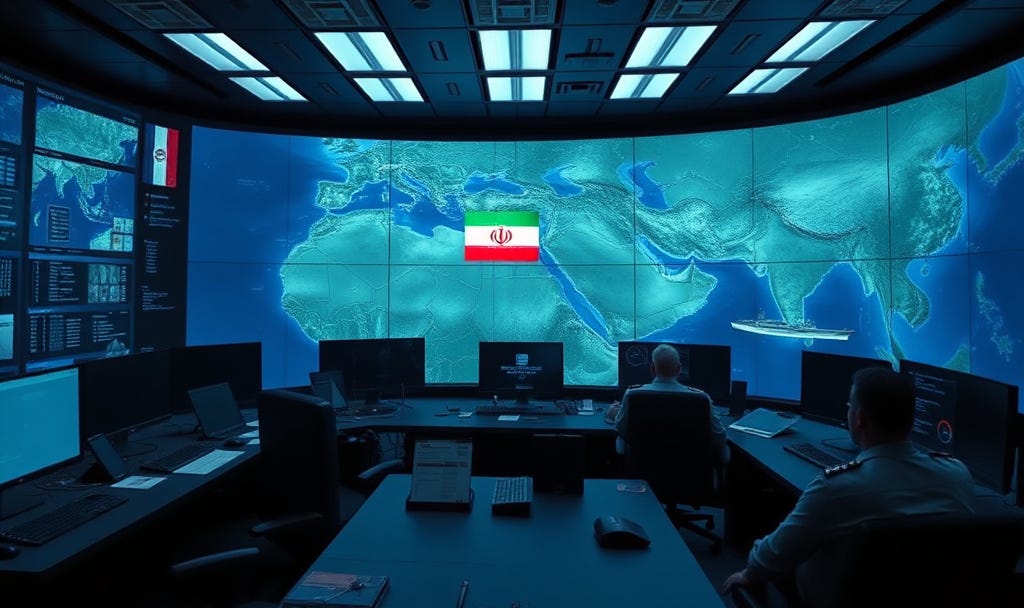
As the world watches ceasefire negotiations stall once again and waits with bated breath for renewed talks between the United States and Iran, Washington finds itself in a no-exit scenario driven by the decline of its regional leverage. This erosion of power in the region has left the United States trapped in a strategic deadlock in which every choice will exact a severe price. That is, if Washington decides to stay, it faces a slow, grinding bankruptcy. If, on the other hand, it decides to leave, it risks destroying the complex yet fragile network of influences that has sustained its power for over a century.
The question becomes, how did Washington trap itself in such a situation? How did the great American empire find itself in a no-win scenario where it is damned if it does and damned if it doesn’t? That question can be partially answered by examining an outdated strategic mindset deeply rooted in a post-World War II mentality.
For decades, the American political establishment operated under the illusion that conventional military superiority automatically translated into geopolitical control. A fallacy laid bare when the overwhelming air and military power in Libya and Iraq failed to secure stable political outcomes.
By carrying the same mindset into its current standoff with Iran, Washington assumed its presence would always guarantee regional dominance. Instead, that persistence transformed what were once seen as symbols of strength, exposed forward bases and naval assets, into major liabilities. These forces now sit largely isolated, serving as static, easily tracked targets for an adversary that has mastered modern containment.
In addition to its outdated mindset, America’s inability to grasp the mechanics of the modern war of attrition also led to this chaotic no-win scenario. Nowhere was this more evident than when Iran masterfully weaponized the concept of attrition by deploying swarms of mass-produced, low-cost drones and missiles that significantly damaged exposed regional bases and forced Washington to respond with multi-million-dollar interceptors. By “pitting” cheap munitions against expensive American defense systems, Tehran engineered a ruinous military and financial ratio where the United States spent two million dollars for every twenty thousand dollars spent by Iran.
The impact of this strategy, however, wasn’t strictly military; it was also economic. By blocking the Straits of Hormuz, Iran was able to disrupt the very entities, specifically the flow of oil and global trade, that directly dictated America’s domestic conditions. For the United States, already burdened with a $39 trillion debt, adding these severe financial pressures meant Washington would find it very costly to stay in the region.
Faced with this stark reality, where Iran’s war of attrition has become both economically and strategically unviable, the question for the United States is no longer how to win, but how to execute a strategic realignment that preserves its core strength. Though difficult to achieve, Washington could succeed if it follows three necessary vital steps.
The first step, though a severe blow to Washington’s imperial prestige, demands a radical strategic retrenchment. This option would require pulling American forces back from exposed, vulnerable forward outposts and lily pads across the region.
For decades, these small, isolated positions were treated as a symbol of American power and regional commitment. In a modern war of attrition, however, they ceased to be strategic assets and became largely static, defenseless targets that served only as liabilities, thereby inviting perpetual attacks that Washington could no longer afford to defend or ignore. By withdrawing from these outposts, Washington removes the physical bait that an adversary, such as Iran, can use to force the United States into a continuous, costly defensive engagement.
The second step requires an immediate abandonment of the mindset rooted in the air superiority fallacy. For too long, Washington operated under the convenient belief that absolute command of the skies was the ultimate arbiter of political stability. This conviction was tested in both Afghanistan and Iraq, where, despite absolute air superiority, the U.S. failed to stabilize either nation or secure a lasting political outcome.
For Washington, these past failures, combined with Iran’s current strategy of missile attrition, make it clear that conventional air power and a heavy bombing campaign can no longer force the regional outcome Washington desires. Furthermore, this reliance on air superiority becomes a critical strategic liability when considering that critical interceptor inventories cannot be replenished before 2029.
For the United States, however, if the first two steps are difficult, the third is the most vital, and arguably the most unpopular. To sustain a viable regional presence, the United States must either seek a comprehensive, strategic, and realistic accommodation with Iran, including the dismantling of economic sanctions, the cessation of maritime blockades, and the release of Iranian funds, or accept the necessity of a total military exit from the region.
In short, the U.S. must either strike a deal with Iran where it accepts the Iranian regional dominance in exchange for a continued, limited American presence or admit it no longer has the power to dictate terms and thus begin a full, managed withdrawal from the region.
There is no middle ground. Attempting to maintain the status quo, ignoring Iranian concerns while clinging to outdated hegemonic attitudes, is a structural dead-end that will ultimately force a total American expulsion from the Middle East.
Ultimately, Washington can no longer rely on an outdated post-World War II playbook to project power in an evolving global order. As history has repeatedly shown, clinging to a broken imperial model guarantees defeat for any power.
In the subsequent installment of this series, the article will examine the exact cost of this denial, detailing the geopolitical fallout and the domestic economic crisis that will follow if the United States refuses to accept this strategic shift.
Gulf countries have learned that hosting American bases just makes you a target.
American aircraft carriers and destroyers are just targets for swarms of drones and missiles.
Netanyahu's arrogance seems likely to cause an American retreat and leave Israel isolated in a region made hostile by Israel's repeated attacks on its neighbours.
America is learning the limits of imperial power, just as Putin's Russia is suffering in Ukraine.
Meanwhile, China exploits Russia's weakness and supports Iran's undermining of America.
And complacent Europe has been forced to wake up, rearm and ally with democracies such as India, Japan, Canada, South Korea, Australia and NZ.
If this all results in the true democracies becoming stronger, that will be a positive.
The USA hasn't won a war since WWII. Yet it continues to try to dominate the planet. There must be "something else" going on.
It is capitalism.
It should be obvious to everyone by now that the Oligarchy always conspires to create a recession every 4 to 7 years. Mortgages are foreclosed on, farm land is sold, stocks tumble. The Oligarchy is the banker in the Parker Brothers game "Monopoly". They go to the Federal Reserve and as if by magic they have millions or even billions in "money" to buy up everything the cheap.
China's last recession was in 1979.
These same Oligarchs are heavily invested in defense stocks. What good is an advanced fighter jet if you can't use it to follow the imperialist playbook to steal the resources from other nations? Don't forget that the purpose of war is profit so when you build that fighter make sure it is loaded with the latest, very expensive, technology advancements. Once you are at war, be sure to place those fighters in a location where they can be found by the enemy and destroyed.
China's last war was a short minor conflict in 1979.
Yes, the US could follow the 3-step prescription and save something of the Empire, but it won’t. The oligarchy wouldn't be able to embezzle more cash.