

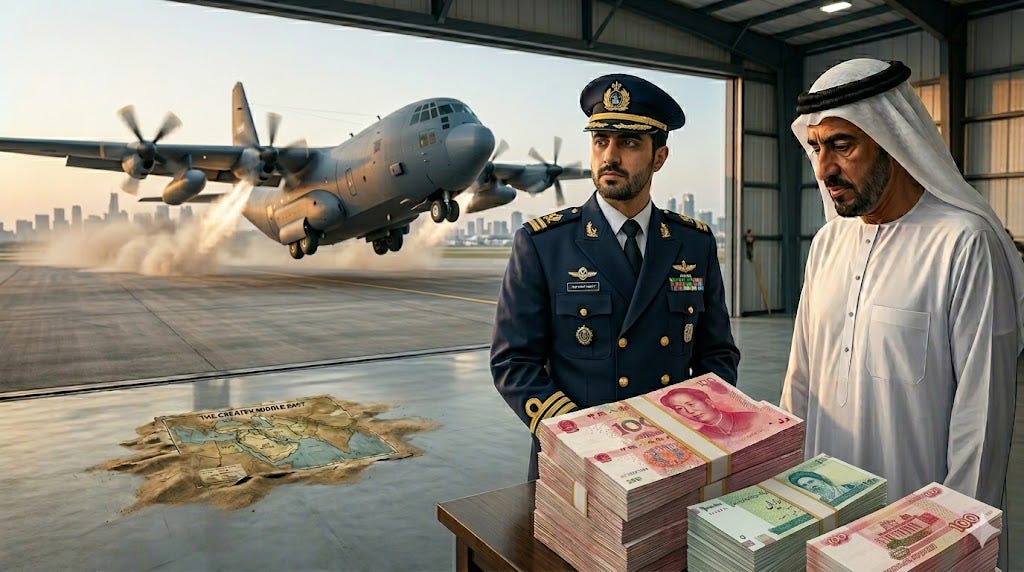
If the military failure in this conflict was technical and the political one was moral, the economic fallout the world is witnessing today represents the success of a deliberate strategy of entrapment. As I have argued in the past, Iran’s objective has never been about a simple conventional victory. Instead, the core tenet of their strategy was to leverage the structural vulnerability of the American economy, specifically the $39 trillion debt, to Iran’s benefit.
By trapping the United States in a vicious cycle where it had to borrow more money simply to remain in the region, Tehran ensured the U.S would find itself in a position where it had to leave to survive economically or remain and go bankrupt.
The immediate evidence of this trap is apparent in the daily cost of the war, which significantly exceeds the official government narrative. While the administration cited the cost as $25 billion for the first 60 days in the recently held hearing in Washington, this was a widely underestimated figure.
The replacement of high-tech infrastructures alone, such as $700 million AWACS aircraft, MC-130 transport planes, and multi-billion-dollar THAAD batteries, makes the price tag of the war significantly higher. Furthermore, because Washington could not accept a loss of military capability, it was forced to re-purchase the military assets at any price. This demand and mindset, in turn, pushed Washington into an Iranian circular trap, where it was forced to borrow and spend more and more simply to replace what was lost.
For the United States, however, the military spending is only part of the trap set by Iran. The other is the destabilization of the Strait of Hormuz, the primary artery for the world’s global energy supply. By controlling the flow of 20% of global oil and 25% of LNG, Iran has been able to successfully tie the crisis in the Persian Gulf to the American household spending.
Nowhere is that strategy bearing fruit more than at the gas pumps. Following the May 4, 2026, Iranian strike on the UAE’s energy sector, the national gas average spiked to $4.45 per gallon, with a trajectory toward $5.00 now near certainty in most states.
For the United States, the increase in gas prices has, in turn, led to erosion of American purchasing power. As reported recently by the Bureau of Labor Statistics (BLS), the Consumer Price Index (CPI) had reached 3.3% in March 2026, proving that the American public is losing its fight against inflation.
For the U.S., this was the moment the economic trap set by Iran showed its success. It was the culmination of a war of attrition designed to force Washington into its final, desperate maneuver: borrowing more money to sustain a war it can no longer afford or perhaps even win.
Data from the Congressional Budget Office (CBO) validated this grim reality. For the first time in history, the cost of simply servicing the interest on the national debt has surpassed the entire national defense budget. In other words, Washington is borrowing money to pay interest on money it already spent, all while trying to fund a war that is cannibalizing its own economy.
Ironically, while Washington remains paralyzed by this cycle, Iran has been able to economically survive, partially because of 46 years of Western economic siege. This endurance is built on a diversified structural base that can function regardless of international sanctions or even the fall of the Riyal.
By diversifying into a non-oil sector which, according to the IMF’s World Economic Outlook 2026, makes up more than 60% of Iran’s GDP when measured by Purchasing Power Parity (PPP), Iran built the capacity to absorb the very energy and inflation shocks that have paralyzed the American consumer.
This resilience was further strengthened in April 2026, when Pakistan formally issued the “Transit of Goods through Territory of Pakistan Order.” By opening six land transit corridors, Islamabad integrated Pakistani ports like Karachi and Gwadar directly to the Iranian border at Gabd and Taftan, effectively neutralizing the American naval blockade.
So, as the United States exhausts its remaining capital to maintain a fleet in a contested sea it can no longer control, Iran and its neighbors used geography to build a trade system that’s functioning entirely outside of American power.
For the United States, this shift and the war, as a whole, go beyond a challenge to its hegemonic influence. It is a final reminder that Washington has already lost this war: militarily to the war of attrition, politically through the loss of morality, and economically, through its own insolvency.
The math does not lie: the age of American hegemony in the Middle East has ended, but not just because of its military or political image, but because the superpower simply can no longer afford to pay.
Excellent, cogent explanation of the reality of this war. Trump won’t accept defeat although Iran has certainly outsmarted us. I dread the next few months while the narcissist continues to refuse accepting that he is totally incapable of making decisions ad will do anything to save his ass.
This, as you describe it, reminds me of the way the Occident took down the USSR. America's USSR moment is nigh. Petrol prices in my neighborhood have shot up, food prices too, but there are specials daily on food. Rents have stabilized, construction still rages on. More humans are walking these days too. More two-wheeled vehicles on the street, a sure sign of downsizing. Thanks for the analysis.