

This is part 2 of a multi-part series. The Fall of the American Power in the Middle East: How Iran’s War of Attrition is Unraveling Jordan and the Gulf.
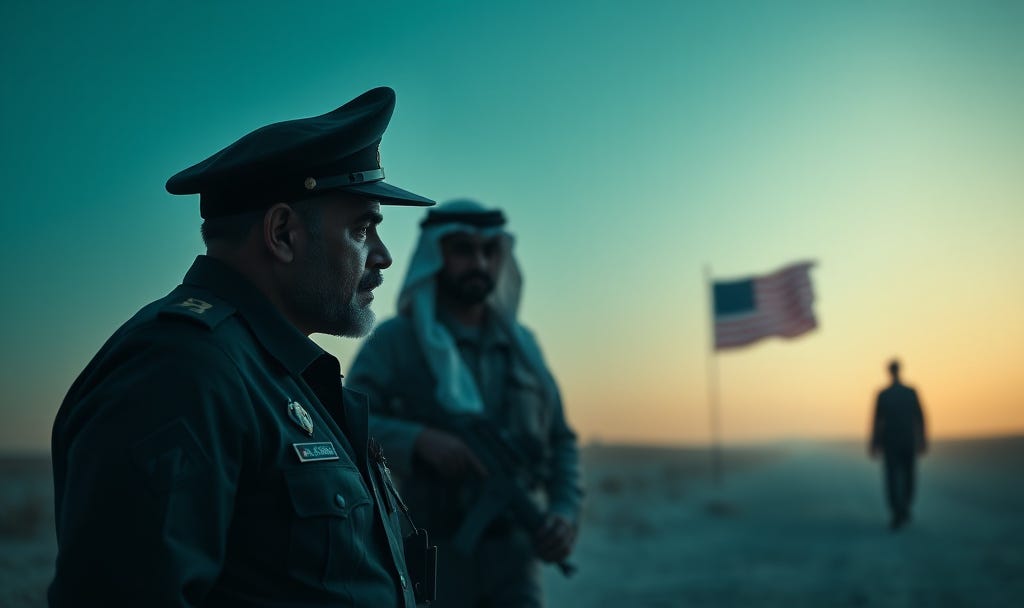
If the military dismantling of the “Spiderweb” was a technical failure for the United States, then the loss of its political hegemony in the region has been a terminal catastrophe. This is not a temporary setback for the U.S.; it is a total liquidation of power driven by a three-pronged collapse across the regional and domestic landscape: the loss of the Arab heartland, the failed strategy towards Iran, and a systematic breakdown of trust within U.S. borders.
For the United States, the loss of the Arab heartland was not a mere military event but a profound political one. It was the result of a foundation hollowed out by a deep-seated hypocrisy rooted in a colonial mindset, which prioritized hegemonic ambition over genuine stability. A mindset that openly advocated a dual system where there would be one law for Western Eurocentric nations and another for everyone else.
Whether through the intervention in Libya, the invasion of Iraq, or various political coups, it became undeniable that Washington’s interests had more to do with maintaining its hegemonic ambitions than the promotion of true democracy. This perception of a double standard eventually eroded the very foundation of the American presence in the Middle East.
For the Arab population in the Middle East, however, American ambitions were never a self-sustaining force. They were only possible with the help of their own leadership. It was this symbiotic relationship that allowed Washington to maintain its massive military footprint in the region while its local partners provided the veneer of regional stability required to sustain that power.
This arrangement was historically held together by a foundational covenant between leaders and the various tribes that make up the heart of these nations.
For more than a millennium, this social contract provided military security and economic stability from the leader in return for obedience: a pact that allowed the leadership to rule so long as the internal guarantee was honored.
However, the American attack on Iran terminated that relationship. From the closing of the Strait of Hormuz to the destruction of tens of billions of dollars of military equipment, it became clear that the leadership had failed as a guarantor of the covenant. In that failure, the military and economic protection that underpinned total obedience evaporated, rendering the contract void, and with it, the very foundation that allowed the American presence to remain on the land.
It was the breakdown of this contract that became the catalyst for the crisis unfolding throughout the Middle East today. The tribes, no longer bound by a covenant, reclaimed their role as the sovereign arbiters of the land. By implementing physical measures across geography, including the closing of vital transit routes, severing supply lines, and controlling the flow of information, the tribes have made the U.S. presence expensive and impossible.
Tribal confederations such as the Bani Sakher in Jordan and the Shammar in Saudi Arabia, for example, have effectively turned the American military presence into a series of isolated desert pockets with no reliable ground supply lines.
For the U.S., the inability of the regional leaders to confront their own tribes means the security that once guaranteed the American presence in the region is gone, and with it, its hegemonic influence.
Ultimately, America’s loss of political hegemonic influence across the Arab heartland led to Washington’s second failure: its Iran policy.
For the United States, particularly the Trump administration, the ultimate objective has always been a total regime change by any measure necessary, and the direct military attack was seen as a primary vehicle to achieve that objective. However, the attack reached the exact opposite of what Washington had intended.
By conducting a campaign of assassinations, including the killing of Iran’s Supreme Leader, Khameini, and brutal strikes on civil infrastructures, such as schools and hospitals, the U.S. lost the very populace needed to possibly support its policies. Furthermore, by killing the civilians and purposely destroying cultural and religious centers, the U.S. inadvertently verified the state’s claims on America’s true objectives: the Syrianization and disintegration of the nation for the sake of Israel.
This fear, along with a rapid and massive Iranian military response, gave the state, especially the military, and particularly the IRGC, the mandate needed to maintain its power at any cost. Thus, instead of a triggering collapse, the pressure unified the populace behind the leadership, particularly the military, as the sole guarantor of national survival.
Thanks to the American attack, Iran has emerged as the undisputed military leader of the region.
America’s loss of political hegemony, however, is sustained by a final failure at home. Fueled by decades of military interventions and deception, from WikiLeaks to the Epstein Files to politically influenced reporting, the American public appears to have undergone a complete separation from the state.
Largely viewing the current conflict not as a defense of national security, but rather as “Iraq 2.0,” the American public has refused to provide the political support needed to continue this operation. For the United States, particularly the Trump administration, the lack of public support makes surviving, let alone winning the war, virtually impossible. As history has shown, notably in Vietnam, without domestic support, there can never be a victory outside the home.
Today, the United States does not exercise the political hegemony of the past. Its narratives are no longer believed, and its moral authority no longer respected. Humanity is witnessing the physical end of the American century in the Middle East. The conversation has changed, and with it, the world.
This is Part 2 of the series. Stay tuned for part 3, where we examine the economic shift and the definite rise of the Asiatic global order.
The comparison with Vietnam is appropriate.
In Vietnam, American forces became isolated in bases, while the Vietcong controlled the countryside.
That contrasted with the different approach in the Australian region, where SAS patrols moved widely in the landscape, monitoring the Vietcong.
Similar things happened in Afghanistan and Iraq.
Another reason the comparison with Vietnam is apt is the loss of support at home, which forced the withdrawal .
Another point is America has alienated its allies, who have refused to join the attacks on Iraq.
Trump's cancellation of military aid to Ukraine means Europe feels abandoned and in no mood to support America. NATO is being divided as America is increasingly ignored.
There is no going back. America is stagnating as the global democracies assert their independence.
Great information and analysis. That tribes in SA and Jordan are isolating US military bases is largely unreported in the west. Look forward to reading your next two instalments.