

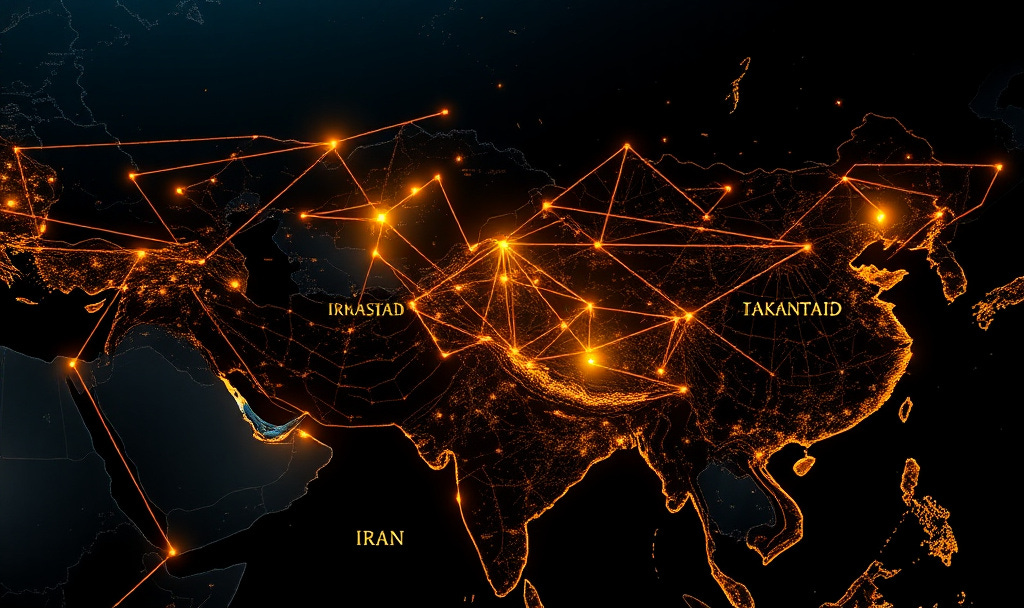
The world breathed a collective sigh of relief on April 7, 2026, when an announcement of a 10-point peace plan and a two-week ceasefire in Islamabad was made between Iran and the United States. From the political capitals of the West to the Economic markets of the East, the international community applauded the agreement.
But while the peace plan and ceasefire won widespread support, they also signaled a profound shift in the world’s political system.
For years, I have written about the construction of the TIIM alliance, Turkey, Iran, Indonesia, and Malaysia, as the strategic vision for a new era. On April 7th, that vision took its first breath of reality. By stepping forward as the indispensable mediator between the Iranians and the Americans, Pakistan provided the sovereign groundwork for the PIC Framework (Pakistan, Iran, and China) to take its seat at the head of the global table. A measure that, by its very existence, closes the door on the Western-dictated peace era while opening one for the Asiatic-led order.
This moment is historic not because of the specific terms of the plan, but because of where the table was set and who sat at the table. For the last fifty years, any major regional settlement was brokered in Washington, Geneva, or Riyadh. Today, that monopoly is over. The fact that the United States and Iran are sitting down in Islamabad, an Islamic, Asiatic capital, signals that the traditional Arab centers of power have lost their seat as the primary intermediaries.
The “Arab Center,” which for a century acted as the bridge for Western hegemony, has now been entirely bypassed. By moving these negotiations to Pakistan, the world has acknowledged that the monopoly held by Riyadh, Amman, and Washington is no longer viable.
Today, the world is witnessing a shift not seen since the 8th-century Abbasid Revolution, when the center of gravity moved from the Arab-centric Mediterranean and into the Persian-influenced heartland of the East. As then, the authority has once again returned to Asiatic actors on Asiatic soil.
This transition was made inevitable by the reality that Arab leadership no longer exercised true power over its own landscape. By prioritizing foreign security agendas over the needs of their own societies, the leadership created a fatal rift between the state and the two pillars, the tribal networks and the clergy, that had always protected and sustained them. As such, they lost the legitimacy and status needed to maintain their power. From the River Jordan to the Gulf, the local foundations that once ensured the stability of “individual houses” abandoned their support and left these monarchies exposed and isolated.
Nowhere is this more evident than in the precarious standing of the Saudi Crown Prince, Mohammad Bin Salman. Despite global headlines, his seat has become extremely fragile because the very tribes who historically anchored the Saudi throne have turned against him and his so-called Westernized vision.
The effect of this internal collapse, however, went beyond the stability of various monarchies. It shook the very foundation on which the U.S. had relied for its security for more than half a century. Without the cooperation of the tribes and the local clergy, the U.S. military lost the very land it needed to maintain its operation.
For Iran and its allies, however, this moment did not occur because of chance, but rather out of calculated patience. That is, while the West, particularly the U.S., exhausted itself trying to maintain a crumbling system and order, Tehran and its allies spent years winning over the people on the ground and building an alternative to Western arrangements. Their efforts and the patience paid off when the PIC framework anchored the ceasefire with the U.S. on April 7th, 2026.
For the world, in particular the Islamic, the rise of the PIC framework has proven that the East is now the broker of its own geography. By turning ancient cultures into a “human radar,” the Asiatic Order has transformed the strategic map, rendering the old corridors of Western diplomacy obsolete.
It is this new geographic reality that is drawing the U.S. to the negotiating table in Islamabad. Washington is moving towards these talks not out of a sudden willingness to agree, but because the Asiatic interior has now become the only ground where regional peace can be secured.
As a result, even if the current 10-point plan proves fragile or if political shifts in Washington or Jerusalem threaten the agreement, the fact remains that the era of Arab-mediated Western influence has reached its end. Tradition has proven it cannot be eliminated, and those who answer to the desert are now defining the world.
Today, the world is witnessing the definitive return of the Abbasid-Iranian hour. This is the official arrival of the sovereign landscape where the East defines its own future and protects its own traditions. Thus, as negotiations begin tomorrow, or perhaps never, the shift I predicted years ago is no longer a theory; it is a historical fact. The vision defined by TIIM has arrived through the PIC framework in Pakistan.
The center has moved, the old guard has been bypassed, and the heart of the Islamic world is no longer Arab; it is Asiatic.
COLONIALISM HAS ENDED!!!
THE WORLD'S COMMERCIAL INTEREST REQUIRES RECALIBRATION????????????
It seems Pakistan was playing on amerikkka side…