

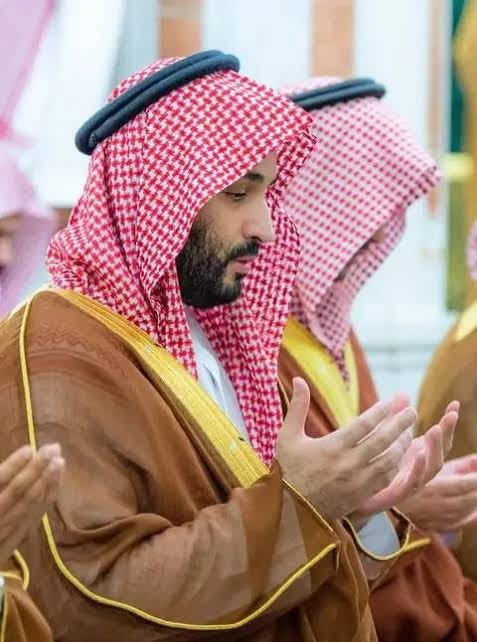
Last Friday, a lone prophetic warning delivered by Sheikh Dr. Abdulmuhsin Al-Qasim, one of the senior imams, from the pulpit of the Prophet’s Mosque in Medina, pierced the very foundation of Saudi Arabia’s political power: “Each of you is a shepherd, and each of you will be asked about his flock.” While those words carried multiple interpretations throughout the kingdom, they nonetheless invoked the ideals of sacred duty and severed the theological legitimacy that the religious establishment had conferred on the House of Saud for nearly a century.
For Crown Prince Mohammed bin Salman (MBS), who had systematically dismantled the traditional consensus among the royal family and the tribes while sidelining the independent religious authority, that warning struck at the heart of his legitimacy and power.
The question for the international community, however, becomes how a ruler who once appeared to hold every lever of state power found himself completely isolated. More importantly, what does this unraveling mean for the future of MBS and the kingdom itself?
To answer the question, one must look at the Saudi socioreligious and political structure that had defined the Saudi kingdom since its inception. For nearly a century, the modern Kingdom of Saudi Arabia was grounded in an unwritten 1932 covenant that connected the monarchy, the tribes, and the religious establishment into a single, unified power structure.
Through that delicate balance, the monarchy secured obedience and stability by honoring tribal autonomy, sharing state wealth, and ruling in consultation with tribal and religious elders who anchored Saudi society.
In an attempt to centralize power, Mohammed bin Salman (MBS), however, dismantled the very consensus that had defined the relationship between the House of Saud and the tribal and religious leadership for nearly a century. By stripping tribal leaders of their historical standing, seizing ancestral lands for mega-projects, and dismantling long-standing cultural and religious norms, such as introducing Western-style entertainment spectacles, MBS eroded the core pillars that had guaranteed the monarchy’s survival across generations of regional upheaval.
The ramifications of MBS’s domestic policies, however, did not stop at the political and cultural door; they bled directly into the kingdom’s military realm.
In Saudi Arabia, unlike Western conventional militaries, security forces, particularly the Saudi National Guard, are drawn directly from major tribal confederations. By moving against the tribes and their leaders, MBS turned on the very sons who guarded the state and hollowed out the military force he needed to sustain his rule.
In response to that betrayal, however, the tribes did not launch an open rebellion against the palace. Rather, the tribal rank-and-file within the security forces, particularly the Saudi National Guard, simply refused to police their own people or defend a leadership that had stripped their elders of standing. Thereby, ensuring a security apparatus that remained officially intact on paper but strategically hollowed out on the ground.
Fully aware of tribal grievances, Mohammed bin Salman nonetheless sought to insulate his rule by substituting the traditional security structure with American military hardware such as the THAAD missile system and Patriot batteries and security arrangements with the United States.
In doing so, however, he eliminated the very human intelligence needed to protect the kingdom’s external security and internal stability. A miscalculation that became clear as alienated confederations such as the Yam and Qahtan shifted their allegiance to become the eyes and the ears of Iran and the Houthis.
That vulnerability was exposed during the recent strikes on Riyadh, which penetrated the kingdom’s defense systems without provoking a decisive response from Washington, shattering the assumption of an American security umbrella.
Beyond misjudging tribal power and Washington’s security guarantees, the Crown Prince also alienated Beijing by abandoning his March 2023 Chinese-brokered agreement with Iran. A landmark détente that had restored diplomatic ties between Riyadh and Tehran and established Beijing as the diplomatic guarantor of Gulf stability.
By discarding that framework and aligning with Washington, however, MBS forfeited his last leverage of security backed by Beijing and thus left his kingdom exposed to attacks from Iran and the Houthis.
Faced with the absence of foreign military intervention, Riyadh attempted an abrupt diplomatic reversal by dispatching Saudi Defense Minister Prince Khalid bin Salman to Tehran and appealing directly to Beijing. However, after seeing Riyadh abandon a settled diplomatic framework in favor of Washington’s regional alignment, Tehran and Beijing met the overtures with calculated indifference.
The recent trilateral summit in Shenzhen further underscored the diplomatic isolation, as Putin, Trump, and Xi focused on their own strategic interests rather than the survival of a crown prince. The meeting made it clear that neither Beijing nor Moscow intends to break with Iran to rescue Riyadh, nor does Washington have any intention of underwriting MBS’s throne.
Stripped of religious sanctification after the sermon in Medina, alienated from the tribal confederations that govern the soil, and left without foreign guarantors in the wake of Shenzhen, Mohammed bin Salman no longer maintains the internal or external support that once sustained his power.
For the region and Mohammed bin Salman, the calculation is no longer whether a political transition will occur in Riyadh, but how rapidly the ruling establishment will move to replace him in order to salvage the House of Saud.
MBS is in hiding moving from bunker to bunker as the days of Saudia Arabia will be returning to the name Arabia.
More and more, MBS is becoming defined by the Abrahamic Choice: build open relations with Israel and risk enraging the populace more than they already are, or continue to ignore Israel and bear the weight of standing between the Middle Eastern blocs who are preparing for war.