

The old rules of war are dead. For decades, the “Kurdish Card” was the West’s master key to destabilize the region. But in early March 2026, the Trump administration attempted to turn that key one last time, triggering a backfire that has not only failed to topple the regime but has permanently redrawn the political and financial map of the Middle East.
The U.S. strategy banked on a fragile Iran that would crumble under a “second front” of Kurdish insurgency. Military planners in Washington and Tel Aviv envisioned a coordinated ground push from the mountains of Erbil and Koya to draw Iranian forces away from the besieged capital.
Instead, the world witnessed the rise of a “collapse-proof fortress.” This wasn’t just built with concrete, but with the “Iranian Birds”: swarms of high-precision Shahed drones that surgically liquidated Kurdish insurgent hubs in Erbil and Koya before the fighters could even cross the border.
On March 1-2, 2026, the IRGC launched surgical strikes against the headquarters of the PDKI in Koya and Erbil. By destroying these command centers and targeting even the Azadi Camp from the air, Tehran proved that any “Second Front” was dead on arrival. The insurgents were liquidated before they could even pack their gear, let alone cross the border.
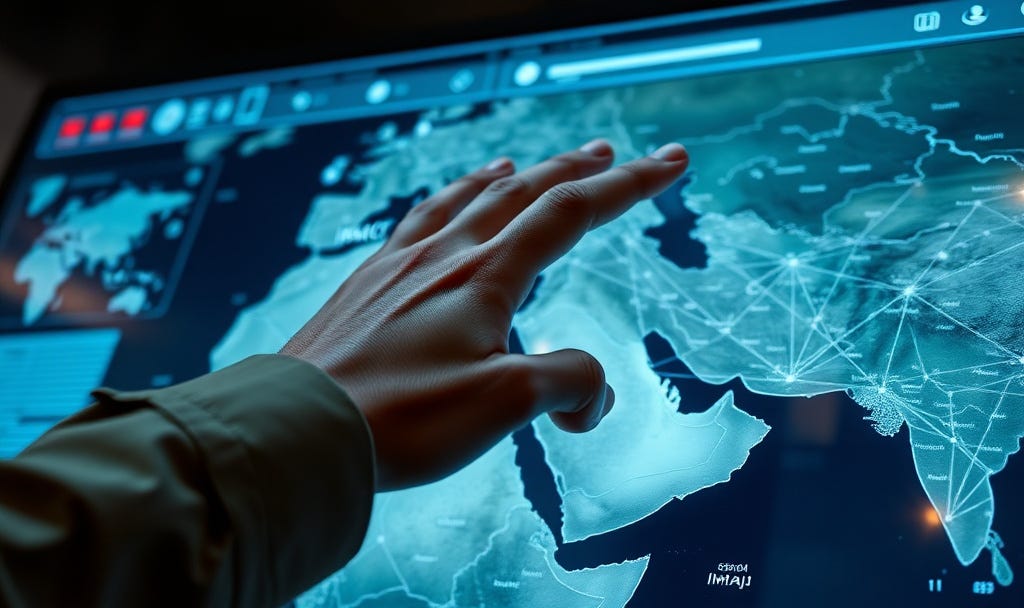
However, a fortress is more than just drones; it’s about control over the pulse of daily life. While the U.S. and Israel were dropping bombs, China, Iran, and Russia were finalizing the mBridge system. By early 2026, this digital currency network, connecting the central banks of Beijing, Tehran, Baghdad, Damascus, and Dubai, had bypassed the dollar entirely. It is this system, by the way, that has led to a conflict affecting the average Kurd on the street.
In 2026, Kurdish autonomy has become a luxury that depends on receiving a paycheck. However, these paychecks are processed through the mBridge, a digital currency system that connects the central banks of Iran, Iraq, and Syria into a single, streamlined financial network. This system enables the central government in Iraq to control the populace by simply “switching off” the entire payment system. If a Kurdish faction shows signs of supporting the U.S. campaign, for example, their salaries, trade credits, and food subsidies vanish at the touch of a button in a central bank office. It is economic suffocation without firing a single bullet.
This digital noose has forced the Iraqi Kurds into a desperate, unthinkable betrayal. To avoid being “switched off” and starved by the mBridge system, the Iraqi Kurdish Peshmerga have undergone a total shift in allegiance. They are no longer the allies of the Iranian Kurdish insurgency; they have become its jailers.
Under pressure from Baghdad and Tehran, the Peshmerga are now disarming militants and blocking border crossings. They are acting as the region’s newest border police, turning on their own kin to prove to the “fortress” that they are no longer a threat. In this reversal, the very people the U.S. tried to weaponize are now the primary force ensuring that no “liberation” reaches Iranian soil.
But President Trump’s miscalculation isn’t just military but also political. By explicitly linking Kurdish dissident groups to the U.S.-Israeli military campaign, President Trump provided Tehran with the ultimate “rally around the flag” moment.
To the average Iranian, even those who hated the Supreme Leader, this is no longer a pro-democracy movement. It is perceived as a foreign-funded attempt to turn Iran into the next Syria or Libya, a plan to carve the motherland into ethnic pieces. Reports of Netanyahu seeking refuge in Germany while Iranian civilians die in the streets have only fueled this fire. This perceived threat to the nation’s very existence has silenced internal dissent and unified the population in a way unimaginable even 6 months ago.
For Israel and the U.S., the attempt to “destroy Iran from within” has failed because it ignored the new reality of 2026. Unity has held, the “Birds” have flown, and the political map of the Middle East has been permanently redrawn. But not by the West, but by those who live there.
enjoy that Martini