

Even as Pakistani Prime Minister Shehbaz Sharif announced that an agreement between the United States and Iran has reached its final stage, and with President Donald Trump signaling that the Strait of Hormuz would be “open to all,” public expectations remain fixed on the illusion of a diplomatic breakthrough.
The situation on the ground, however, presents a far more pragmatic reality. The framework under negotiation represents neither a historic triumph nor a sudden alignment of shared strategic goals. Rather, it is a calculated tactical pause driven by a cold, inescapable reality: Washington’s desperate, urgent need to stop its own fiscal hemorrhaging.
For the United States, the ongoing war with Iran has been an economic catastrophe: a relentless and punishing drain on the American treasury. This bleeding, however, reached a critical point when Tehran weaponized its geographic advantage.
By leveraging the Strait of Hormuz, Tehran was able to engineer a multi-billion-dollar shockwave that devastated not only the American economy but also the world. Through a combination of surging crude oil prices and an inflationary grip on the American domestic market, Iran successfully implemented a war of economic attrition that sapped the United States at a staggering pace of a billion and a half dollars a day. Factoring in a $39 trillion national debt, where the annual interest alone surpassed the entire defense budget, Washington finally hit a wall of pure financial exhaustion, which in turn sent it to the negotiating table out of pure self-preservation.
The core of this proposed memorandum, however, hinges on a sixty-day ceasefire, a condition designed specifically to reopen maritime shipping lanes and relieve that immense economic pressure. For the U.S., however, this reliance on such a transactional arrangement exposes a permanent fracture in its regional security architecture.
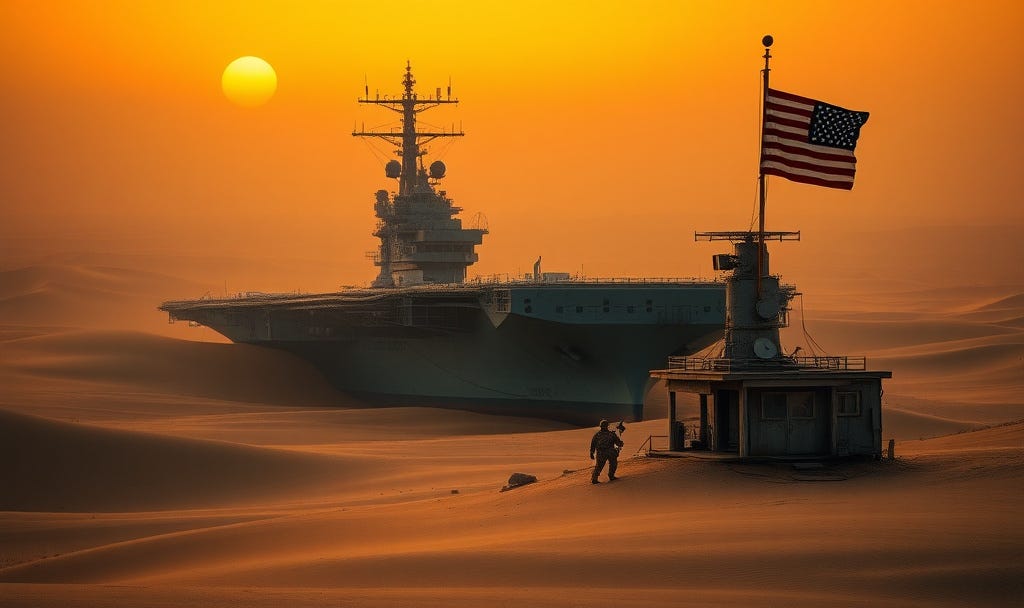
For decades, American defense strategy in the Middle East relied on a ‘managed outpost model,’ where host nations provided the secure logistics, political compliance, and stable local infrastructure necessary to project American military power.
That system, however, collapsed with the massive military damage inflicted by Iran on American bases in the region. By successfully penetrating regional air defense grids to cripple advanced assets such as the THAAD and AWACS early-warning systems, the Iranians proved to the host nations that their military hardware provided by the United States could no longer guarantee regional security.
States such as Saudi Arabia, Qatar, and Bahrain, for example, watched the superpower struggle to shield its own hardware, an observation that completely altered their internal stability. In Bahrain, for example, the Shiite majority became the eyes and ears for the resistance. In Jordan and Saudi Arabia, the impact was even more severe when the local tribes actively halted the transit of goods across their lands. Recognizing that the American security umbrella was no longer a reliable guarantee and witnessing Washington prioritize its own survival above all else, the local populace ensured that the American presence was effectively cut off and paralyzed.
With its regional bases physically paralyzed and its domestic economy bleeding daily, Washington has been forced to navigate Tehran’s non-negotiable demands. From the unfreezing of twenty-four billion dollars in Iranian assets to the comprehensive removal of sanctions to the financial reimbursement for the costs of the war, it has become clear to the United States and the world at large that Iran holds sufficient maritime and military leverage to secure most of its objectives. Tehran, thanks to the war, has emerged as the clear economic and military powerhouse, forcing the superpower to negotiate on its own terms.
That became clear today when President Trump declared that a deal with the Islamic Republic of Iran was “now complete.” However, the reality is that the deal is not complete, because what currently exists is a finalized memorandum of understanding, and not a settled peace. Yet, even if a formal peace were eventually to be signed, it would not change the fact that Tehran has not only won the conflict but also established a new order.
By damaging the structural pillars that have historically allowed the United States to project power, regional military bases, strategic reputation, and economic hegemony, Iran, backed by its strategic allies, China and Russia, ultimately was able to dictate the terms of the negotiation with a superpower. Demonstrating a feat that very few actors on the global stage possess.
Trump talks about “signing a deal,” he’s really pointing to America’s strategic defeat. It’s the language of a power that can no longer impose outcomes, only negotiate from weakness. Every agreement becomes a bandage over decline, a performance to mask lost leverage. The deal isn’t victory — it’s admission.
I always knew Iran was gonna do something special