

As stated in the first part of this series, Washington’s strategy in the Middle East has reached a structural dead end. The political establishment remains tethered to a post-World War II playbook that ignores the reality of modern attrition. By refusing to choose between a realistic adjustment to the new regional reality or a full, managed withdrawal, the establishment has made a controlled transition impossible. Therefore, for the United States, the question now becomes: what will be the cost of this denial?
Financially, the current military posture is devastating. The United States is spending nearly $1 trillion a year on defense while paying $970 billion in annual interest on the national debt; a combined expenditure that hollows out the federal budget and preempts all other national priorities.
For the U.S., this trajectory is simply unsustainable. Unlike the post-9/11 era, when the U.S. could borrow heavily to fund its war in Iraq and Afghanistan, often relying on foreign creditors like China to finance those ambitions, the current fiscal environment has fundamentally shifted.
Today, following more than two decades of American military ventures, the global appetite for U.S. debt has evaporated and has been replaced by a strategic preference for alternatives to the dollar. Consequently, the United States no longer possesses the luxury of borrowing at scale without risking its currency or eroding its global creditworthiness.
Yet, the United States, driven by long-standing political and military aspirations, continues to fund a massive global footprint that its economy, in many ways, can no longer sustain. Furthermore, because it refuses to accept the current military and economic realities on the ground, the U.S. is forced to cannibalize its own resources to maintain these legacy commitments. As a result, the U.S. is effectively hollowing out its future for the present that it has already lost.
For the United States, this economic attrition has bled into the domestic political sphere, where the significant majority of Americans, tired of decades of military ventures and declining economic conditions, are demanding an end to the war with Iran and America’s exit from the region. This pervasive discontent has, in turn, triggered a deepening political crisis, as the administration insists on maintaining a regional strategy that stands in direct opposition to the will of the electorate. For the administration, as economic conditions worsen, the domestic rift will only widen, thereby creating an unsustainable environment where its refusal to pivot only intensifies the public backlash that will ultimately force an American exit from the region.
Beyond this domestic instability, the strategic foundation of American global authority will also erode significantly. The credibility of the United States, already under massive strain, will face deeper damage as the cost of failing regional strategy is passed onto allies. This became clear recently when Germany’s recent bid for the rotating seat on the UN Security Council was rejected. A development that would have been unthinkable in the post-WWII era, or even just five years ago.
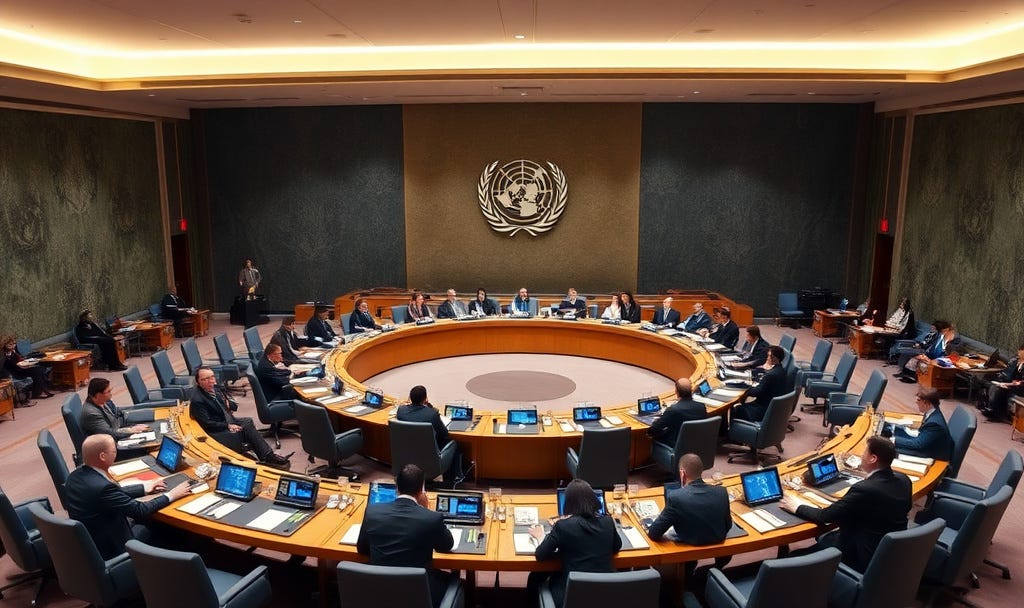
For the world, this rejection was not merely a diplomatic shuffle; it was a targeted rebuke of Germany’s unwavering and increasingly isolated support for U.S. regional policies. By forcing its allies to share in the diplomatic fallout of this failing strategy, Washington has ensured that its partners are punished alongside it, and Washington’s clinging to an outdated hegemonic model is leaving the entire Western bloc increasingly isolated.
Today, Washington finds itself shouting into a void where its historical weight no longer commands the same gravity, forcing the establishment to confront a reality: it must either adapt to a multipolar environment or accept an accelerated, and potentially irreversible, decline in global standing.
If Washington continues to ignore these realities, the transition will not be managed; it will be forced. History shows that empires that fail to recognize their limits do not get to choose their exit. By refusing to initiate a controlled transition, Washington risks transforming a manageable strategic realignment into a total loss of the economic and geopolitical autonomy it seeks to preserve. The final tragedy is not the loss of a region, but the loss of the ability to dictate an economic future because the focus remained on fighting a war that had already been lost.
An excellent review and analysis of current events in West Asia effecting U.S. standing politically and economically. The effect on the American economy has not been fully revealed. More to come and it’s not going to look pretty. My guess is America’s political and financial elites will not and can not accept a change in status. Hence the road down from the hill will be rough and felt by all Americans. It just a matter of time.
Thank you for going into such constructive detail in response to my question today. I’m looking forward to attending your interactive class.