

For nearly 100 years, the modern Kingdom of Saudi Arabia was grounded in a sacred 1932 Covenant that tied the monarchy, the tribes, and the religious establishment into a single, unified power structure. It was a pact of mutual interest where the crown guaranteed protection and reverence for tribal traditions, and in exchange, the religious and tribal elites, the custodians of the realm’s faith and soil, conferred the sovereign right to rule.
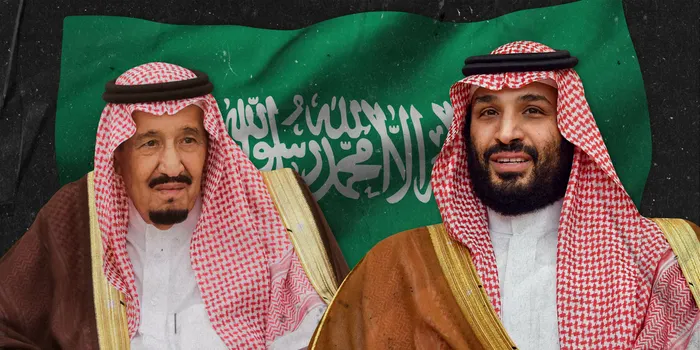
That foundational arrangement, however, was torn down by Saudi Crown Prince Mohammad bin Salman (MBS), who, in his quest to centralize control, dismantled the very pillars that had defined Arabian society for more than a millennium.
By cutting off traditional tribal patronage, seizing ancestral lands for expensive state mega-projects, and enforcing a top-down Westernization, such as opening entertainment venues across the ultra-conservative society, MBS severed the very domestic anchors that guaranteed the monarchy’s survival. Thereby, ensuring a multi-front crisis that would leave his regime structurally brittle and permanently exposed.
Socially, MBS severed the regime’s historic ties with the nation’s core pillars, the religious establishments and the tribes, by overriding their authority. At the same time, he was seen as aligning himself with the American and Israeli stance on the Palestinian issue. Thereby marginalizing a core Islamic cause and shattering the monarchy’s standing as the true defender of the soil and faith.
The ramifications of his cultural policies, however, didn’t stop at the political and cultural door; it directly bled into MBS’s military realm.
For Saudi Arabia, nothing in its modern history has so brutally exposed the regime’s total dependence on a Western security umbrella as the American war on Iran and the subsequent Iranian response. Bombarded with massive missile and drone strikes on U.S. bases across the kingdom, Riyadh found the Western defense system completely ineffective in neutralizing the threat.
Far from offering protection, the breakdown of the American defense shield allowed the Houthi forces in Yemen to enforce a total maritime blockade across the Red Sea and seize control of the strategic Yemeni coastline along the Bab-el-Mandeb Strait. In addition, because the kingdom relied entirely on its East-West pipeline, constant missile and drone strikes by the Houthis forced a total shutdown of the facilities, which in turn choked off the kingdom’s access to international waters.
This export collapse was compounded by the closure of the Strait of Hormuz, which severed the kingdom’s remaining maritime oil routes and wiped out state revenue almost overnight. With sovereign reserves already drained by vanity mega-projects and an expensive war, the regime was forced to pass the deficit onto an already alienated public.
Having personally engineered this existential security trap through his launch of the Yemen war and the total reliance on a failed Western umbrella, Crown Prince, Mohammed bin Salman was forced to turn to both external allies and internal pillars for relief.
In the case of the former, he requested direct military intervention from Washington and its regional ally, Egypt. However, constrained by depleted armament stockpiles and over stretched capacities, the United States declined to step in while Cairo, still reeling from the historical memory of its disastrous 1960s war in Yemen, flatly refused to deploy troops to bail out MBS.
In the case of the latter, MBS turned to the tribes, particularly key southwestern confederations such as the Khawlan bin ‘Amr, Yam, and Qahtan. However, having been stripped of their financial stipends and sociocultural autonomy, these tribes, along with many others, not only rejected the palace’s demands but actively enabled the Houthis to the Crown Prince’s detriment.
In other words, rather than manning the frontier, the tribes abandoned their security roles and allowed the Houthi forces to move openly through key border corridors and thus, leaving Riyadh’s southern flank completely unprotected.
For MBS, however, this tribal rift created an unexpected and unsolvable military dilemma. On one hand, to secure the border and stop the Houthis, he was forced to turn his security apparatus against the non-cooperative tribes. On the other hand, because those same armed forces, especially the Saudi Arabian National Guard (SANG), were drawn directly kins of these same tribes, ordering an internal crackdown risks an immediate mutiny and a deep structural fracture within the security forces.
With external military intervention off the table and his internal armed forces paralyzed by tribal loyalties, MBS turned to his remaining pillar of defense: the religious establishment. Yet here too, he found no shelter.
While state-salaried clerics in Riyadh issue generic, top-down decrees, local imams and provincial religious leaders across the kingdom have responded with a quiet, deliberate neutrality. By withholding the sermons necessary to legitimize his autocratic rule or frame his war as a sacred duty, the local clergy severed the regime’s moral core, leaving MBS completely isolated.
This convergence of external isolation, tribal detachment, military strain, and clerical silence leaves not only Mohammed bin Salman’s future fundamentally unsalvageable, but threatens the very survival of the dynasty he was entrusted to lead. For the first time in over sixty years, a royal intervention to remove a sitting Crown Prince is seen as the state’s only structural exit.
Such a reckoning, however, is not without precedent. When King Saud’s reckless governance threatened the monarchy’s survival in 1964, the family, senior princes, and religious leadership stepped in to strip him of power and enforce his abdication. Facing total military failure, economic isolation, and domestic abandonment, King Salman, whose ultimate allegiance lies with preserving the dynasty, not his son, may be forced to execute that exact emergency brake to save the House of Saud before the state itself unravels.
Yet, even if Mohammed bin Salman prevents avoids a pre-emptive removal or the King fails to act during his lifetime, the structural trap remains fixed. MBS’s entire hold on power relies not on genuine domestic consensus, but on the personal authority of an aging, ailing monarch.
Therefore, the moment King Salman passes away, the Crown Prince will be left entirely exposed without the monarch’s legal shield. Lacking the sovereign legitimacy to command the bay’ah or unite the kingdom’s core pillars, his attempt to claim the throne will meet with open refusal. Not only from alienated tribal factions and mid-level military officers, but also, from the very rival royals and business elites he purged and humiliated in his rise to power.
Deprived of both internal consensus and external military intervention, his assertion of total power will trigger an immediate, irreversible breakdown within the ruling apparatus.
Either way, if history is any indication, whether through a pre-emptive royal removal to save the dynasty or an immediate post-monarch collapse, Mohammed bin Salman’s political future is effectively over.
I'd like to thank everyone for their comments and opinions😊 I always want to know what others think. Partly because they may have an opinion or facts which I can learn from😊🙏🏽
Thanks everyone & please continue the debate and the conversation
Hopefully this is another crack in the carefully crafted Pro Israel power structure in the Middle East. Part of a slave revolt that is spreading beyond the ability of the elite to control. I have always been uncomfortable with the muddled image that we are presented where the supposedly Muslim country of Saudi Arabia has this close alliance with anti-Muslim Israel and it’s lapdog the USA.
POWER TO THE PEOPLE